 ANIMEWORLD
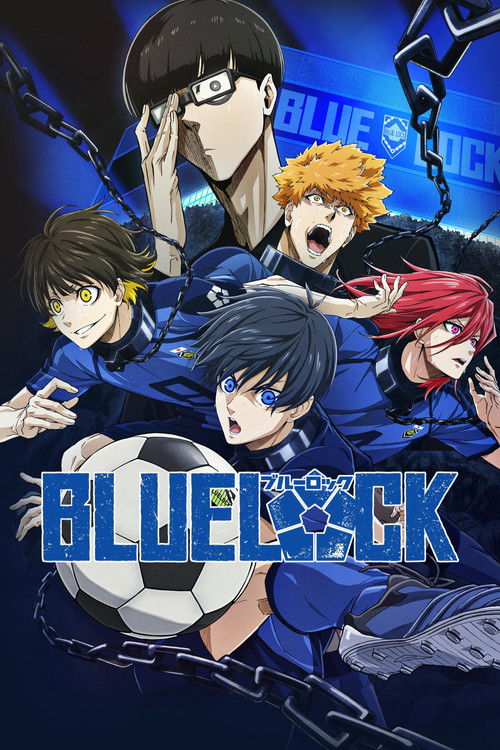
Blue Lock is not a gentle sports story about teamwork. It is a high-pressure experiment: Japan wants the most ruthless striker in the world, so it locks its most promising young forwards inside a facility and forces them to prove, match after match, that they can be the one player who decides a game. The hero, Yoichi Isagi, begins as a talented team player who passes when he should shoot. Blue Lock breaks that habit, rebuilds it, and then keeps raising the standard. This guide explains the full television run, the film, the best watch order, and what each phase of the story is really about, without spoiling the biggest results in detail.
Blue Lock at a Glance
| Television episodes | 38 episodes in total, as listed by TMDB |
| First television premiere | 9 October 2022 |
| Final television episode listed by TMDB | 28 December 2024, titled “Last Attack” |
| Film | Blue Lock: Episode Nagi, a 2024 film retelling the early story from Seishiro Nagi’s point of view |
| Main character | Yoichi Isagi |
| Central figure behind the project | Jinpachi Ego |
| Genre | Sports, action, drama |
TMDB groups the 38 episodes in one combined listing. In broadcast terms, viewers usually talk about a first season and a second season, often called the U-20 season. Together, those two runs add up to the same 38 episodes, so there is no missing season hiding between them. If a platform lists the show differently, count the episodes rather than trusting the season label alone.
The Best Watch Order
- Blue Lock Season 1 — Start here. This is the First and Second Selection, and it introduces Isagi, Bachira, Nagi, Baro, Chigiri, Kunigami, and the rules of the facility.
- Blue Lock: Episode Nagi (film) — Watch after Season 1. The film revisits the early part of the story through Nagi’s eyes, so it lands best once you already know the main events. It is enriching, not required, for the main plot.
- Blue Lock Season 2 (U-20) — Watch last. Blue Lock’s survivors face the Japan U-20 team in a match that tests everything the project was supposed to create.
Do not start with the film if you want the cleanest first experience. Nagi’s version is more powerful when you can compare his quiet, almost accidental genius with Isagi’s desperate, analytical climb.
Season 1: The First Selection
Season 1 opens with a blunt idea from Ego: Japan does not need eleven good players; it needs one striker with the ego to take the shot himself. The players are divided into teams, ranked, and forced into matches where survival depends on goals and individual value. Isagi’s early problem is not talent. He reads the game well, but he passes the decisive moment to someone else. Blue Lock punishes that instinct and rewards the player who can smell a goal, move into space, and finish.
The First Selection is where the show’s language is built. You learn what “devouring” another player means, why a striker must sometimes use a teammate as a decoy, and why a beautiful pass can still be the wrong decision. Bachira brings instinct and joy, Kunigami brings direct power, Chigiri brings speed held back by fear, Baro brings arrogance that is also a weapon, and Nagi brings a natural gift that looks effortless until you see how much it costs him to care. Isagi does not beat these players by copying them. He beats them by learning to combine their weapons with his own spatial awareness.
Season 1: The Second Selection
The Second Selection changes the game again. Players are no longer protected by a fixed team. They must form new combinations, prove themselves in smaller-sided matches, and survive a system that can separate friends in a single result. This is where Blue Lock becomes a story about chemistry as much as ego. A great striker still needs to understand the player beside him, even if the final shot belongs to one person.
The rivalries sharpen here. Baro’s belief that he is the king of the pitch collides with Isagi’s growing belief that he can control a match without touching the ball every time. Nagi’s talent becomes less of a mystery and more of a choice: will he keep drifting, or will he decide to want something badly enough to fight for it? By the end of the first season, Isagi is no longer the boy who passed at the crucial moment. He is a player who can see the whole pitch, anticipate the next move, and still take responsibility for the finish.
Blue Lock: Episode Nagi
Episode Nagi is a film, not a new season, and that distinction matters. It returns to the beginning of Blue Lock and tells it from Nagi’s perspective. Where Isagi’s story is about hunger and calculation, Nagi’s story is about a gifted teenager who found football almost by accident and discovered, slowly, that ease is not the same as fulfilment. The film reframes scenes you already know: a lazy trap, a casual goal, a partnership with Reo Mikage that starts as convenience and becomes something much more serious.
Watch it for character, not for new plot twists. It does not replace Season 1, and it does not advance the U-20 story. It explains why Nagi matters, why Reo matters to him, and why a player who seems to need nothing can still be changed by competition.
Season 2: The U-20 Match
Season 2 is built around one huge test: Blue Lock against Japan’s U-20 national team. The U-20 side is not a collection of villains. It is a real team with structure, experience, and its own stars, including players who believe Blue Lock is an insult to proper football. That makes the match more than a showcase. It is an argument about what Japanese football should become.
Here, the scale changes. The pitch feels bigger, the opponents are faster and more organised, and individual brilliance alone is not enough. Isagi must read not just one defender, but a whole defensive system. The returning players must also prove that the facility did not just make them selfish; it made them dangerous in a way a normal team cannot easily prepare for. The season’s tension comes from that balance: ego versus organisation, instinct versus structure, and a group of teenagers who must become a team without losing the selfish edge that got them selected.
Main Characters to Know
- Yoichi Isagi: The protagonist. A gifted reader of space who learns to turn awareness into goals.
- Meguru Bachira: An instinctive dribbler whose joy on the ball hides a lonely search for a true football partner.
- Seishiro Nagi: A naturally gifted player whose talent looks effortless and whose growth is about learning to want victory.
- Shoei Baro: A powerful, self-declared king of the pitch who forces everyone around him to raise their level.
- Hyoma Chigiri: A fast winger whose speed is tied to an injury and a fear he must overcome.
- Rensuke Kunigami: A direct, physical striker whose straightforward style is tested by Blue Lock’s demand for evolution.
- Rin Itoshi: A cold, elite talent who becomes a central rival and a measure of how far Isagi still has to go.
- Jinpachi Ego: The architect of Blue Lock, whose harsh philosophy drives every selection and every match.
What Makes Blue Lock Different From Other Sports Anime
Most sports anime celebrate the team above the individual. Blue Lock does the opposite, at least at first, and that is why it divides viewers in a useful way. It argues that a striker who always passes is not being generous; he is avoiding responsibility. That idea is uncomfortable, and the show knows it. As the story continues, it also shows the limit of pure selfishness. The best players do not just take shots. They manipulate defenders, create space for themselves by using teammates intelligently, and understand when a pass is actually the most selfish move available because it leads to a better chance for them later.
The football itself is stylised. Players have almost supernatural awareness, shots bend and explode with dramatic force, and matches are explained through internal monologue as much as through play. If you want realistic tactics, this is not that show. If you want psychological pressure, rivalries, and the feeling of a match turning on one decision, Blue Lock delivers it again and again.
How Long Will It Take to Watch?
With 38 television episodes plus a film, Blue Lock is a medium-length commitment, not a marathon like a long-running shonen series. Most viewers can finish Season 1 in a few focused sittings, watch Episode Nagi as a single evening film, and then move into Season 2 without losing the thread. Because the story is built around selections and one major match, it is also easy to pause between phases: after the First Selection, after the Second Selection, and before the U-20 match are all natural stopping points.
Watching Blue Lock in India
| Legal streaming platforms to check | Crunchyroll, Netflix |
| India availability | Not Confirmed — check the platform app in India before subscribing for this title |
| Hindi audio in India | Not Confirmed |
| Hindi subtitles versus Hindi audio | Hindi subtitles are not the same as a Hindi dub. Confirm audio separately in the platform listing. |
Catalogues change by region and over time, so a title shown on a global platform page is not proof that it is in the India catalogue on a given day. Use the official app, search the exact title, and check both the episode list and the audio options before you start.
Related Guides on Anime World
Continue with the Blue Lock Watch Order, the Blue Lock Hindi Dub guide, and Where to Watch Blue Lock in India. For other sports and competition anime, see the Haikyuu!! Episode Guide, the My Hero Academia Episode Guide, the Jujutsu Kaisen Episode Guide, the Demon Slayer Episode Guide, the Attack on Titan Episode Guide, and the Solo Leveling Episode Guide.
Frequently Asked Questions
How many Blue Lock episodes are there?
There are 38 television episodes in total, as listed by TMDB, plus the film Blue Lock: Episode Nagi.
Do I need to watch Episode Nagi before Season 2?
No. It is a retelling from Nagi’s point of view and is best watched after Season 1. Season 2 follows the main story directly.
Is Blue Lock finished?
TMDB lists the television listing as ended, with its final listed episode dated 28 December 2024. That does not mean the wider Blue Lock story in other media is finished; it describes the television listing checked here.
Is Blue Lock only about football?
Football is the setting, but the story is mainly about ambition, ego, rivalry, and how a player decides to take responsibility in a decisive moment.
Where should a new viewer start?
Start with Season 1, then Episode Nagi, then Season 2. That order preserves both the main plot and Nagi’s character arc.
Last verified: 28 October 2026
Sources
- TMDB — Blue Lock (38 episodes, premiere 9 October 2022, final listed episode 28 December 2024)
- TMDB — Blue Lock: Episode Nagi film listing
- Crunchyroll — official platform listing to check in India
- Netflix — official platform listing to check in India

Leave a Reply