 ANIMEWORLD
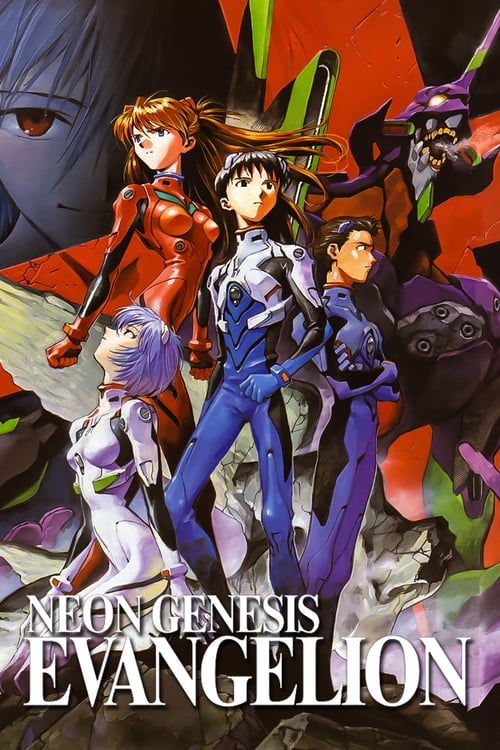
Neon Genesis Evangelion is a landmark mecha series that starts as a story about giant robots fighting monsters and becomes something far stranger and more personal: a psychological drama about lonely teenagers, the adults who use them, and a world that ended once and might end again. In a shattered future, teenagers pilot giant bio-mechanical Evangelions against mysterious beings called Angels, and the battles on the surface are only half the story. The series ran to 1 season and 26 episodes in 1995, and it changed anime forever. This guide explains the story, the characters, the Angels and where to watch it legally.
The Story of Neon Genesis Evangelion in Brief
The year is 2015, fifteen years after a catastrophe called the Second Impact devastated the world. Half of humanity is gone, the seas have changed, and the ruined city of Tokyo-3 stands above a secret underground base. Into this world comes Shinji Ikari, a quiet fourteen-year-old boy who has been summoned by his estranged father, Gendo Ikari, the commander of a secret organisation called NERV. Shinji expects a reunion. Instead, his father orders him to pilot a giant bio-mechanical weapon called an Evangelion against a monstrous being known as an Angel, which is attacking the city. Shinji does not want to fight, he does not understand the machine, and he has no reason to trust the father who abandoned him. He climbs into the cockpit anyway, because nobody else will.
The Main Characters
Shinji Ikari is the heart of the series, and he is the opposite of the confident hero that mecha anime usually gives us. He is anxious, withdrawn and desperate for approval, especially from the father who seems to value him only as a pilot. His story is about a boy who keeps being told he is the only one who can save the world, and who keeps asking, quietly, why it has to be him. His growth is not a simple rise to confidence; it is a slow, painful process of learning to want something for himself, and to say no when he needs to.
Rei Ayanami is the quiet first pilot, a girl who seems almost empty, speaking little and showing less, but whose stillness hides a mystery that runs to the very centre of the story. Asuka Langley Soryu is her opposite: loud, proud, fiercely competitive and desperate to be seen as the best, a girl whose confidence is armour over deep wounds. Misato Katsuragi is the adult who tries to give the children a home, even as she carries her own trauma from the Second Impact. And Gendo Ikari stands above them all, cold, distant and unreadable, a man whose plans for humanity are never fully explained until the very end.
The Angels, Explained
The Angels are the mysterious beings that attack Tokyo-3, and they are the engine of the plot. Each one is different in shape, in power and in the way it fights, and no two battles are alike. Some are vast and slow, some are fast and cunning, and some attack in ways that have nothing to do with brute force at all. NERV’s job is to stop them before they reach the underground base, because the series makes clear that if an Angel reaches what lies beneath Tokyo-3, the result would be a catastrophe on the scale of the Second Impact itself.
The Psychological Drama Underneath the Battles
What set Evangelion apart in 1995, and what keeps it talked about today, is how seriously it takes the inner lives of its characters. The series spends long stretches inside Shinji’s head, showing his fear, his loneliness and his longing for connection, and it does the same for Rei, Asuka and Misato. The battles are spectacular, but the show is just as interested in what happens after them: the silence in the apartment, the awkward meals, the conversations that stop halfway because nobody knows how to say what they feel.
The Ending and Why It Still Divides Fans
Evangelion’s ending is one of the most famous and most argued-over endings in anime. Without giving it away, the final episodes step away from the plot almost entirely and turn inward, into a meditation on identity, connection and the fear of other people. Some viewers found it a bold and moving conclusion; others felt it left the story unfinished. The debate has never really ended, and it is part of why the series is still discussed decades later. The films that followed, including the Rebuild series, offer different versions of the story and its ending, and the catalog also lists the Evangelion films, such as Evangelion: 1.0 You Are (Not) Alone, for viewers who want to see how the story was retold. Whatever you make of the ending, it is worth watching the original series first, because the ending only lands if you have spent time with these characters and their pain.
The Single Season: What to Expect Across 26 Episodes
Neon Genesis Evangelion ran to 1 season and 26 episodes in 1995, spanning the genres of Sci-Fi and Fantasy, Animation and Drama. The early episodes are the most conventional, with a clear pattern of Angel attacks and Evangelion battles, and they are a good way in for viewers who love mecha action. The middle of the season deepens the characters and the mystery, and the final stretch turns inward, becoming stranger and more experimental. It is a short series by modern standards, and its density is part of its power: every episode matters, and the story moves fast. If you want more thoughtful science fiction, our best sci-fi anime list is a good next step, and our Code Geass page covers another landmark series about teenagers carrying impossible burdens.
Where to Watch Neon Genesis Evangelion Legally
Neon Genesis Evangelion streams legally on Netflix. The series is listed with Hindi, Tamil, Telugu and English languages. Availability and dub languages can vary by region, so check the official app where you are. If a site claims to stream it through unofficial servers, that is not a legal source, so stick to the official platform.
Neon Genesis Evangelion: Frequently Asked Questions
What is Neon Genesis Evangelion about?
In a shattered future, teenagers pilot giant bio-mechanical Evangelions against mysterious beings called Angels. Underneath the battles, it is a psychological drama about loneliness, connection and the adults who use children to fight their war.
How many episodes does Neon Genesis Evangelion have?
1 season and 26 episodes, from 1995.
Who are the main pilots?
Shinji Ikari, Rei Ayanami and Asuka Langley Soryu, each piloting an Evangelion against the Angels.
What are the Angels?
Mysterious beings that attack Tokyo-3, each one different in shape and power. If one reaches the secret base beneath the city, the result would be a catastrophe like the Second Impact.
What is the Hedgehog’s Dilemma?
The show’s central image: hedgehogs want to huddle for warmth but hurt each other with their spines, just as people want connection but fear being hurt by it.
Where can I watch Neon Genesis Evangelion?
Legally on Netflix, with Hindi, Tamil, Telugu and English languages listed. Check the official app for what is available in your region.
The Bottom Line
Neon Genesis Evangelion is a landmark series that starts as a mecha action show and becomes a raw, honest portrait of lonely teenagers trying to survive a world that keeps asking them to save it. Across 26 episodes it delivers battles, mystery and a psychological depth that anime had rarely attempted before. Start at episode one on Neon Genesis Evangelion, and when you finish, our Fullmetal Alchemist: Brotherhood explained guide and our best drama anime list have more stories worth your time.



Leave a Reply